Heart

This is the face of pain.  It sears.  It takes your breath away.  You gasp and clutch at your injury, your head white-hot, confused.  Minutes later, the pain subsides just enough to allow the injured to understand: uh-oh, this is bad — I really did it this time.

The other day, Mo went down like a sack, freakishly, doing something he loved to do — the simple, boyish, exhiliarating act of shagging a fly ball in the outfield.

Every kid that’s ever picked up a bat, glove and ball has had this fantasy, a fantasy Mo replayed in his mind before every game he played, as part of his pre-game ritual.  Here’s the fantasy, which echoes through your mind with the sound of your favorite baseball announcer (and mine was Phil Rizzuto): “Holy cow, he hit that ball a ton…Rivera goes back, back, back — and he MAKES THE PLAY on the warning track…”

It’s such a pure, simple act when done by someone with such grace and athleticism as Mariano Rivera.  Guys like Mo, like Bernie in his prime, they moved like gazelles and made it look effortless.  According to reports, newspaper guys would tease Mo upon occasion, asking: “Who’s the best all-time Yankee outfielder?”

“You know..” Mo would say, an impish smile on his face.

“Who?” they’d ask again.

“Me, man!” he say.

And now comes the hard part.  Right now, he’s no doubt on pain meds and he’ll go to New York for further testing with the surgeon who did his shoulder and they’ll look at the pictures and maybe do another MRI, or MRI with contrast, light his leg up like a Christmas tree with that strange chemical-smelling dye that makes you want to puke, while you’re in that tube with your headphones on, but still hearing that pounding MRI DUH DUH DUH DUH DUH DUH DUH DUH that seems to go on forever.

And then, there are the pre-surgery rituals and you’re led into that workshop with all tiles and monitors and stainless steel and it’s cold and the AC/DC is blasting over the speakers (why surgeons like to hear headbanger music while they operate is beyond me) and you count backwards from 100 and the next thing you know, you’re coming to and you’re in the recovery room and you blink and blink again as you focus.

And at that very point, the easy stuff is over because the very next day you start the rehab and you see how stiff your leg is, like a new baseball glove that’s got to be broken in.  It’s natural to despair.

I expect Rivera will shine, because he has heart, as only a Real New Yorker does. 

It’s hard work, my friends, coming back from an operation, even those that the docs say, oh-so-cavalierly are “routine.”  Yeah, routine for THEM.  Trust me: for the patient, it is HARD WORK.

No matter what happens from the point of regaining consciousness in the recovery room, on — because the technical aspect, the surgery itself, should go smoothly – Mo controls his fate.  He’s a superbly conditioned athlete who has defied time, but he is 42, after all and he does not want to get back to pitching slow-pitch softball in the local bar league.  He wants to pitch major league baseball at the highest level, for the New York Yankees.  “OK” is not good enough, not for a pitcher like Mo.

If this is, in fact, the end of Mo’s career, then it’s perfect, almost Biblical. He’s had his time to shine, as no one else has — and who amongst us can say that?

The morals to this story?
– respect your gifts and use them with honor;
– take pride in your work, and let it give you joy;
– know that nothing lasts forever;
– age with dignity and grace, while retaining the enthusiasm of youth;
– use your gifts and your assets to help others, who are in need

Mo knows this and more.  He came up from nothing, in a small fishing town in Panama. Now, he is a worldwide sports icon.  But Real New Yorkers know what Mo is all about.

The winning was great, but only one part of who the man is. I salute him in whatever he decides to do next, and look forward to the next chapter in Mariano Rivera’s life.

Rest assured, it will be lived with heart.


Raging Bull(s***)

One percenters gone wild.

That’s what happened recently at the New York Athletic Club.  You know, that Central Park South bastion of white shoe, keep-the-pesky-Jews-out, Ivy League douchery.

A fight broke out.  Well, not exactly a fight.  A wild melee, straight out of Gangs of New York, replete with head butting, broken bottles and broken noses, women thrown to the floor, 20-somethings throwing haymakers at 40-somethings, the bartender trying to stop the fight and getting flattened and frantic calls to 9-1-1.

Check out this classic account of the donnybrook here:

http://wallstreetjackass.typepad.com/raptureready/2012/04/ny-athletic-club-fight-.html 

and here

http://cityroom.blogs.nytimes.com/2012/04/24/brawl-sheds-an-unwelcome-light-on-a-tony-athletic-club/?ref=nyregion 

Best of all was the letter to members sent by one S. Colin Neill, the club president, who warned recipients about showcasing photos and written accounts on social networking sites and advising all — in effect — “what happens at NYAC, stays at NYAC.”

Well, jeepers, when the cops are called and arrests are made, then it becomes public and all bets are off.  No doubt some will point to their arriviste members and/or “guests.”  Others will speculate as to the ethnicity of those involved (hmmm, Muffy, it says here that those involved included a Doran, an O’Grady and a Drowica — from Long Island’s North Shore, reports The New York Times).  Were these cretins financial types?  From old money?  Scions of baby furniture magnates?  Hopefully we’ll soon find out.

And who were the lovely damsels allegedly at the center of the festivities?

In this time of Citizens United, “corporations-as-people” and the worst looking Lorenz curve in 60 years, all we Real New Yorkers  can say is:

“Stay classy, one-percenters!”

Catskill Mountain Music


It’s been a sad week for Catskill Mountain memories.  Levon Helm died hours ago.  His music, from backing Dylan, to his work with The Band and in decades after with his Midnight Rambles and regular touring, is a key part of my inner soundtrack.  When Music From Big Pink was released, it was the anti-Sergeant Pepper.  Simple, pure, elegant in its simplicity. And yet, it had the same roundhouse impact on our fevered little teenaged brains.  Now it’s called Roots Music, or Americana.  Then, it was just The Band.  And the music was written, with Dylan, in that little rented house, Big Pink, in West Saugerties, NY — in the Catskill Mountains, three hours north of New York City .

Some of my earliest and favorite memories are from my summer experiences in the Catskills.  To the West and South of the Woodstock/West Saugerties area, in Ulster County, was the Borscht Belt region of the Catskills, in towns such as Monticello, Liberty, Loch Sheldrake, Ellenville, Parksville, Livingston Manor, South Fallsburg, White Lake and,  to the East, Kerhonksen.  Here, we’d enjoy our summer idyll, year after year, at bungalows such as the one pictured above.

Bungalow colony life…us kids would think, ah, some day, our parents would strike it rich and we’d eat with the swells at glamorous hotels featured on the roadside billboards.  My favorite was for Brown’s Hotel.  “My Favorite Resort,” says Jerry Lewis — when we saw that billboard on the Quickway, we knew it wouldn’t be long before we saw Ritchie, Butchie, Yussie, Luby and the gang.

This past week, the Brown’s Hotel — converted to a residence and cited for numerous code violations — burned in the biggest fire in Sullivan County history.  Weeks before, the Tamarack in Warwarsing, burned.

The list of derelict Catskill resorts goes on: Concord, Nevele, Grossinger’s, The PInes.  Speaking of Grossinger’s, Lou Goldstein, the so-called Master of Simon Sez, and tummler extraordinaire of that hotel (closed in ’86), died this week at 90.

The good news on all accounts is that the memories live on.  Right, Levon?  We just saw you and your daughter Amy and band at Tarrytown Music Hall only weeks ago and you were a magnificent point guard, leading your team to one rollicking tune after another. 

Real New Yorkers understand the salt-of-the-earth goodness of Levon, a guy from Arkansas who left home in the 11th grade to tour with Ronnie Hawkins.  I don’t know what he would have made of the Borscht Belt in its heyday, but on some level, it would have been a fit.  Good, honest, downhome fun — and to those who would think it declasse, well, TFB.

And you know what? Real New Yorkers still dig the Catskills — the Ulster County, Woodstock/Saugerties side, and the schmaltzier, western Sullivan County side.  The air remains sweet.  The tall trees sway.  The grass is dewy and the lakes full of pickerel.  The area remains a great place to be a kid — no matter how old you are.

RIP, Levon, Lou, Brown’s and Tamarack.  See you on the other side of the bridge.


The First Baseball Glove

The trees have buds, spring training for the Little Leaguers has begun and Triangle Sports, across the street from the rising Barclay’s Center on Flatbush Avenue, Brooklyn, NY, is up for sale.

The entire Barclay’s Center/Flatbush neighborhood is up for sale, actually, as all the mom and pop store owners swoon at the sight of restaurateurs and boutique owners waving fistfuls of dollars at these aging entrepreneurs, who bravely stuck it out in Brooklyn through the lean years.

Triangle Sports has been in business for 96 years.  It is an anomaly in today’s big-box world.  It is a creaky, multi-level, place with a sagging staircase and dusty shelves, where you can still buy a fishing license.  Or get fitted for Red Wing work boots. 

Or buy a kid’s first baseball glove.

Was it really 20 years ago that I eagerly climbed Triangle’s stairs to their baseball department, to inspect their rows of Rawlings, Wilsons, Mizunos and MacGregors?  My quest: a first baseball glove for my five year old son, who suddenly, unexpectedly and happily professed a love of all things baseball and, specifically, all things Yankees.

I asked the clerk to see his offerings for a righthanded little kid and, understandably, he showed me a collection of little plastic gloves.  Toy gloves.

These would not do.  “What do you have that’s a little, uh, better?” I asked.  He drew me aside.  “Why spend the money until you know your kid is really into baseball?” he said, not unreasonably.

I wanted the good stuff.  He walked over to another row of gloves.  They were Rawlings, tiny little butter-soft Rawlings fielder’s gloves.  They looked like miniature pro models.

I suppose it was an extravagance, but this was the only one that would do.  “I’ll take it,” I said. 

My son was overjoyed.  He rarely took it off.  We played catch with a real hard ball (under-handed) for hour after hour in Prospect Park and, in years to come, he and his friends joined the 78th Pct. Little League.  His second team (age 7): The Wormy Pizzerias.  Don’t ask. They had a “real” name, but the goofy little kids on the team re-named it Wormy Pizzerias.  Those first years there were errors aplenty, lots of laughter, and parental bonding.  And, in congruence with those Park Slope years, his teams were made up of rich kids, poor kids, and kids in-between.

Over time, the kids grew and got better and stronger.  Their tiny little baseball bats were shelved for bigger, sleeker models and they hit the ball with real pop. 

And, of course, their gloves got bigger too.  But I still kept that first Rawlings, along with his first pair of little rubber cleats, no bigger than the palm of my hand.  Did he really scoot ’round the bases in these tiny Nikes?  I have them, to this day, in a red plastic shopping bag from Eagle Provisions, the old Polish supermarket on Fifth Avenue and 17th Street, in the South Slope.

So Triangle Sports is selling their store, after 96 years.  Maybe it will be to one of the high-profile celebrity chefs reportedly sniffing out locations across from the new sports arena.  Maybe it will be to the owner of a new mega screen sports bar, who hope to catch the pre- and post-game crowds that will mill about and spend money.  Maybe it will be to a high-rise condo developer. 

Freddy’s bar is gone, moved to a new location in the South Slope.  City Lighting is gone.  The tile and flooring store is gone.  The Pintchik family, who own the paint and hardware stores of the same name, are landlords for many desirable, nearby, Flatbush area properties and are supposedly wheeling and dealing.  It’s a new land rush.  The old makes way for the new.  And, as every Real New Yorker knows, the City is always a work-in-progress.  “Change” is the only constant. 

And yet.  Some things do not change, some things are perennial.  Again, there are buds on the trees, kids in the Park and carefree laughter.  They practice their fielding, in advance of the new Little League season.

Once upon a time, in just such a springtime, a young father bought his little boy his first real Rawlings at a creaky little mom-and-pop store on Flatbush Avenue, and there was sweetness in the air.

44 Years Make a Difference

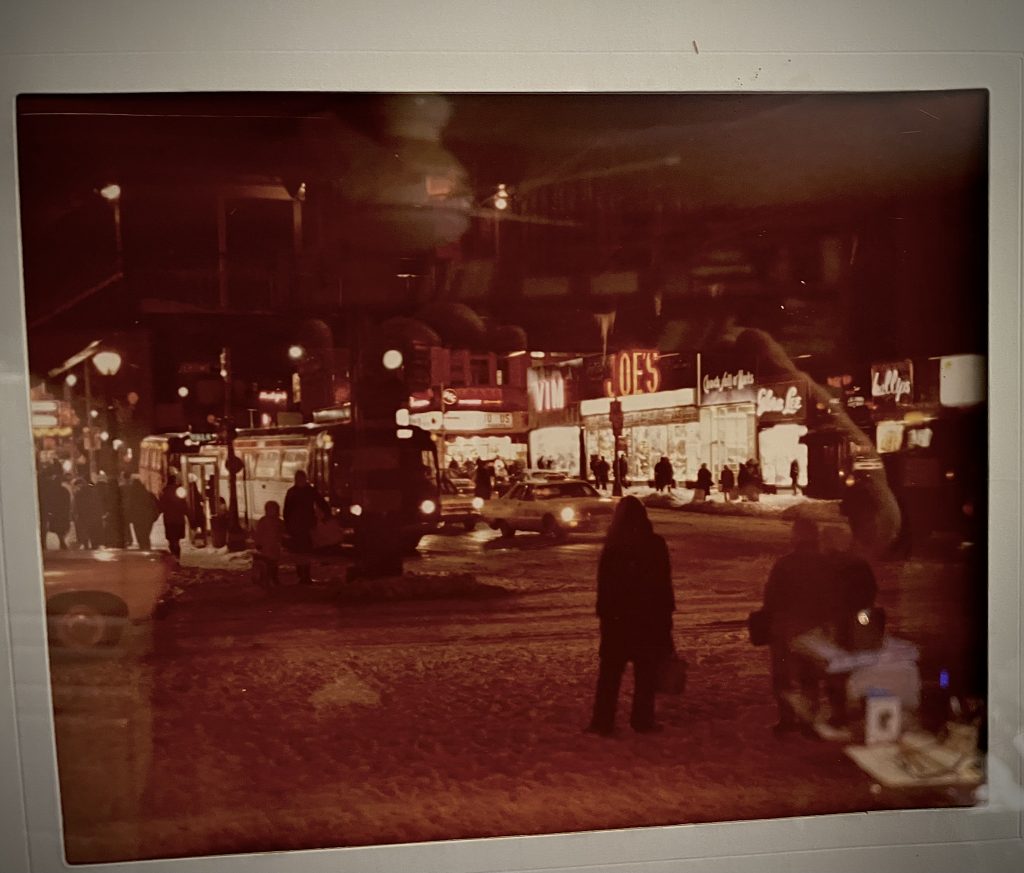
What a difference 44 years make.  Real New Yorkers remember ’68 vividly.  The war.  The politics.  The drugs.  The riots.  The rip of our social fabric.

But what do you remember of the daily life?  What was it like, to live here in ’68?  Check this video out to see it all, in 2 minutes and 40 seconds.  http://cityroom.blogs.nytimes.com/2012/03/08/strolling-through-1968-new-york-in-160-seconds/?ref=nyregion 

The German filmmaker flashes images on the way uptown to Central Park and we get a feeling, a vibe, via rapid-fire imagery, of the tone and tempo of NYC 44 years ago.

I was 17 that year. A dopey kid, in a fog.

See the video.  What are your net takeaways?  Here are some of mine:

Back then (compared to 2012) there was less glitz. Ours was a city steeped in a sort of decayed, 40s-ish look and feel.  The blocky look of the massive cars.  The still-visible hand-painted ads on the sides of buildings.  The whole black-and-white look of the place. Remember: The parks were threadbare.  More park schmutz. 

On the other hand: More “dressed up” people walking the streets of Manhattan.

Overall, I remember – or I think I remember — a less “modern” feel. This was the last legs of old school NYC, before it hit bottom with the mid-70s financial crisis. The city only started to transform into a shrink wrapped, sanitized Disney resort as crack burned itself out and the markets rebounded. Then the rising housing prices in Manhattan increased the velocity of movement to Brooklyn and, now, here we are: land of 1,000 dancing trustafarians on every brownstone block.

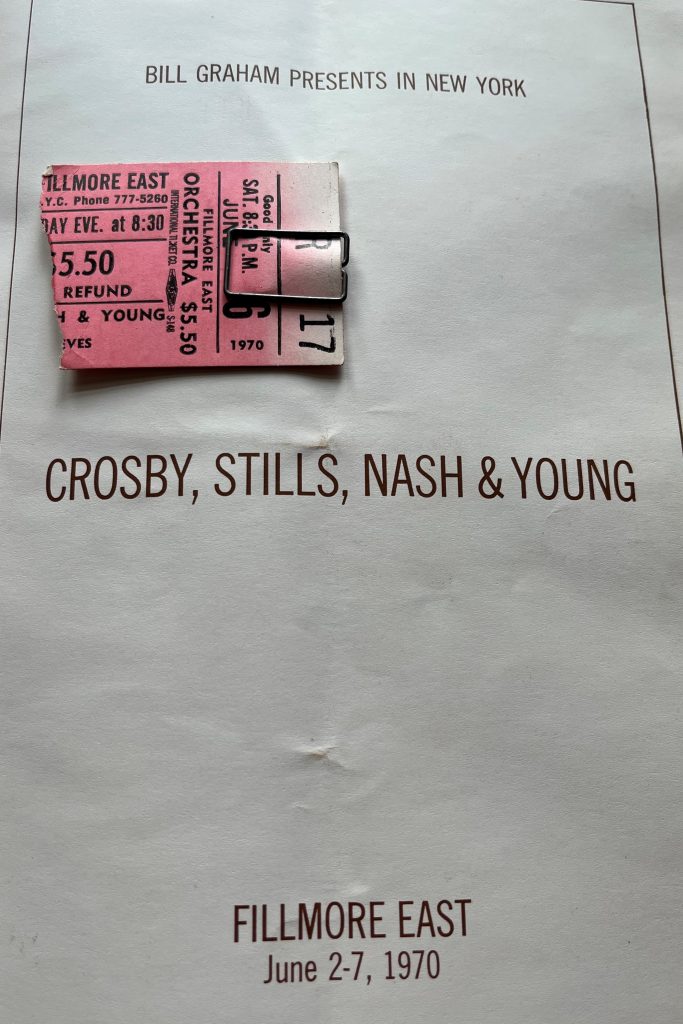
So, what’s my opinion, after viewing the video? I look back fondly at the things I did in those days (late shows at the Fillmore! Schafer concerts! $1 movies on 2nd Avenue and St. Mark’s Place, next to the library!). Me and all my friends were all in the same boat.  Sons and daughters of WWII vets still in the five boroughs.  No white flight for us.  We had no money, were worried sick about the war (and we all had friends who didn’t come back) and yet…maybe it’s the haze of time, maybe it’s a faulty memory, maybe I’m geezering out, but despite all the political upheaval back then, I still remember a feeling, a sense, that there was hope — and I don’t have that optimism these days. I dunno.  Maybe I’m worn out from the 24/7 bad news whirl of the Internet.  Maybe 9/11 just kicked my ass, mentally.  Or maybe, it’s just the reality that our country is split in two and rows in opposite direction, so that we go ’round in circles.

Yeah, NYC today is shiny, new, happening and hip, but it ain’t got no soul. Anyone out there know what I’m saying?

We Await Opening Day

             In just a few weeks, the Yankee home opener will mark the mental close of another winter.  Not a particularly hard one, but a Real New Yorker winter nonetheless.  The long new season, full of promise, lies ahead like a kid’s summer.  So much time, so much time.  How unlike the summers of adult life, which scoot by like the finger-flick of an iPad.

             Thinking back, I recall that the Yankee home openers of my youth were always midweek day games against Detroit.  It was an event.  The entire neighborhood would make plans to play hooky from work or school.  We’d take the #4 train down to 161st Street and run down the “el” stairs and down River Avenue to get on the ticket line for our non-reserved upper deck nosebleed seats.

            Leader of the pack would be Big Larry.  Larry, our superintendent so long ago, died a few years ago.  He mumbled when he spoke; my name is Marty — he would call me “Moh.”  I think back and remember him swabbing our hallways on Sunday mornings, his hair and white tee-shirt drenched with sweat.  I remember the tattoos on his forearms.  They were faded blue-green.  I think they were of anchors. 

He was in the Pacific in the Big One, double-ya double-ya two.  Sometimes when we were lucky, he would take out the Japanese sword he “found” during his tour in the Pacific and let us do dangerous, non-PC things with it. 

             My dad was in the European Theater and he had it tough.  But even he admits that the guys in the Pacific had it even tougher.  Heat, malaria, an enemy you couldn’t see.  Booby traps.  Crazies charging at you, screaming like banshees.  Japanese Zeros, kamikazees — no thanks, I’d take The Bulge too, like my dad.

             Larry’s kids were our best friends.  His son, Larry –Lawrence, they called him — was my buddy.  Joanne was my sister’s good friend and the youngest Cathy was, well, the hapless tag-along little sister.   

             Larry’s day job was on 48th Street, Music Row.  He repaired musical instruments.  He got his son a full set of Ludwig drums, Johnny Cash style, that is, one piece at a time, “out the back door” — a mismatched set.  In their basement super’s apartment Larry and I played drums loudly, and badly, along with the radio.

             I loved that apartment of theirs, and I was there at least as often as I was in my own.  There, we played music, as loudly as we wanted.  We ate sandwiches on the formica table without plates (horror of horrors!), we ate spaghetti until our stomachs burst — not boring old pot roast like we had.

             We talked sports, we talked about the Yankees and, in time, we talked about girls.  Time stretched before us and every spring Big Larry would take us all to the Big Ballpark in the Bronx.

             High up in the grandstand, surveying the subway, the Bronx County Courthouse, the Concourse Plaza Hotel (which wouldn’t let Elston Howard in, my father would always remind me), we were kings.  In our hands were pennants and pretzels, while the grownups tossed back beers.  We kids looked forward to the day when we, too, could call the beer guy and order a round.

             Big Larry was hardly rich — he probably couldn’t afford to take a gang to the new Stadium these days — but he was always generous.  Wherever that family went, I was invited along. Peach Lake,Jones Beach, Yankees opening day, I was always invited.  I loved when he asked me to help push-start his cars, which were always $50 clunkers. I was flattered that he thought I was big and strong enough to make a difference.

 My friend Larry would shrink in shame as we pushed these bombs down Webb Avenue until Big Larry popped the clutch, turned the ignition key and gassed it.  The engine caught and plumes of thick black exhaust smoke spiraled up to the Bronx heavens.

             Once underway, Big Larry would push the buttons of the radio until he found a song he could snap his fingers to.  “Toe-tappers,” he’d call them. He’d lean back, and to his wife say, “Annie…light me up a Lucky.”  Annie, my surrogate mother, would light up two in her mouth and pass one up front to her husband.  Cool.

             Annie passed away as well, just weeks after Big Larry.

             Big Larry always worked hard, and he knew how to party.  At big holidays, he’d spend a fortune on Christmas presents for the kids.  For Easter, they all had spiffy new outfits. 

             When their relatives came over, it was “game on.”  Big Larry would play Eddie Albert and other pop and/or country crooners on his high-fi and they’d dance and dance, shouting and drinking until early in the morning.  I marveled at the magic, as before my very eyes cases and cases of Rheingold would disappear over an afternoon and evening of party-time.

             And it was truly magic how my sullen demeanor would brighten once I went down to that dark, dank basement apartment.  There, I’d join Big Larry, Annie, Lawrence, JoAnn, Cathy and the rest of the clan.  We’d watch the grownups dance and drink in a swirl of cigarette smoke and good cheer.  One time, Larry’s Aunt Agnes got really drunk and, glass in hand, slowly bent to sit on her chair, only she missed it by a good two feet and ended up plopping down on the bare wood floor, laughing and laughing, so hard, and we all laughed too, because it was a holiday and we were having good mindless fun, and who cared if she laughed so hard she peed on the floor – which made us all laugh even harder.

 The Yankee home opener is only weeks away.  It marks the mental end of another dreary winter.

             Goodbye, Larry.  Goodbye, Annie.  I miss you.  Rest in peace.

 Love,

 Moh

(Note: this post is excerpted from my soon-to-be-published anthology of short fiction, Home Front: A Collection.)


You Can Save This Rat, Or You Can Turn the Page

Oh, this is so perfect — the head of the MTA opposes a bill that would ban eating on the subways.  Here’s the link to the article in today’s New York Times: http://www.nytimes.com/2012/02/14/nyregion/mta-chief-opposes-ban-on-eating-in-the-subways.html?hp 

In case you hadn’t noticed, rats are running amok in the subways.  A Straphanger’s Report survey finds that riders have spotted rats in 1-out-of-every-10 subway stations.  Time-starved riders eat more on the subways.  Chicken-starved rats eat the leftovers. 

It’s a perfect storm of rodent renewal.  Think “Born Free,” Real New Yorkers style. 

The MTA Commish, Joe Llota, was once known as the “rat czar,” when he worked as Deputy Mayor under the “czar czar,” Rudy G.  Llota rolled up his sleeves and eradicated a severe rodent infestation problem.  But that was then and this is now.

With a bill in Albany that would ban all food eating on the subways, punishable by a $250 fine, Llota says, hey, that’s discriminatory against minorities and little kids eating their meager meals on the way to school. 

Hold the strychnine — maybe he’s onto something.  Maybe the explosion of the rat population in NYC subways is actually a defining, teachable moment.  Think of the possibilities:

  • Name That Rat: Create a citywide contest to name your station’s favorite rat.  This could help promote spelling accuracy, while teaching schoolchildren how to fill out an entry form — a skill that will help them all through life;
  • Stupid Rat Tricks: Straphangers waiting interminably for their train could teach their platform rats how to roll Snapple bottles, sit up and beg for BBQ chips, jump across the third rail – Letterman could send a camera down to tape the fun.  This teaches basic behavioral psychology, as it fosters a love of animals;
  • Rat Math: To keep school test scores up, kids could learn to count the fast multiplying rats in their station.  No calculators allowed, children!
  • Comfort Rats: Sweet-tempered rats could be specially trained to comfort the sick and poor huddled in our subway system.  Plump, cuddly ones could be petted, and nestle nicely next to the less fortunate.  Hey, they do it with dogs in hospitals, right? Who says we don’t take care of our own?
  • Savory Pies: do I need to spell it out? This is Home Ec — NYC-style!

So, yeah — right on, Joe Llota.  Why ban eating on the subways, which helps feed our rat friends?  But, we’d take his approach one step further.  Encourage the rat population to grow.  Make the last car of every train a “dining car” where people can eat their blueberry muffins, wings, chips, lo mein and more with reckless abandon.  And don’t throw out your leftovers — no, just drop it on the floor or out the window onto the tracks. 

Those little fellers gotta eat, after all.  They were born free.  They have a right to live free.

Right, Commissioner Llota?


Just Another NYC Nabe

I did it.  I returned to Park Slope, had a great meeting, and enjoyed an epiphany.  “The Old Neighborhood” was just another NYC nabe.  It did not have magical powers.  It could not hurt me.  It was there, available, for my use whenever I wanted it. 

Just like any other NYC Nabe.  Over time, it will continue to change and, as all Real New Yorkers know, this is the way of our City.  The burned out fruit store on Seventh is now a pet supply store.  The former Snooky’s space, after three or so failed restaurants, is now a big bageleria.  Aunt Suzie is kaputsky.  But, overall, meh.  It was a pretty day.  People were out walking.  Delivery trucks were double parked.  Just another day in Park Slope.

OK, it was pretty weird to see the skeleton of the Atlantic Center on Flatbush, arched like the dinosaur in the grand hall of the Museum of Natural History.  Sixth Avenue near the cop house is now a two-way street.  The entire area, though, is about the same.  Some very pretty blocks.  Lots of traffic congestion.

And lots of memories.  But those are transportable.  Those are on the mental hard drive and backed up in the Cloud.  They’re saved, stored, protected.  Park Slope will change and, in time, will have as much relevance to me as this view of Midtown East, as seen from the Queensboro Bridge.  I never would have imagined that the Tin Man would be implanted into the Lego-like big box apartments of this part of the City. 

I once worked there in that neighborhood, in the A&D building, 150 East 58th Street.  I knew every store on every block.  It was MY neighborhood.  Now?  WTF. It is totally foreign to me.  I don’t know it anymore.

So I had my meeting, re: publication of my upcoming collection of short stories, Home Front (or, will I change it to The Real New Yorkers, as my publishing expert friends advise?) drove around Park Slope, hopped on the Brooklyn Bridge, faded right to the fun, curvy ramp leading to the FDR North — as I had done so many times in my 25 years in Brooklyn.  Only now, instead of exiting at some point in Manhattan, I kept heading North, merging onto the Harlem River Drive. 

And, as I drove on, towards Dyckman Street, I felt good — great, in fact.  Why not?  I was almost back home.

What To See, What To Do?

This coming week, I am returning to my old hometown, Park Slope, to discuss the publication of my short story collection, Home Front. 

It will be my first visit to Park Slope since, let’s see, December 2010 — and that was a quick pass-through, as I returned a U-Haul truck on that snowy Christmas Day after helping move my son to his new home, in North Brooklyn.

It feels strange.  I still consider myself “untimely ripped” from the comfort zone of my 25-year life in Brooklyn – although I suppose it’s ridiculous to think that way after living in one place for a quarter century.

Yet, on the other hand, and as regular readers of The Real New Yorkers  know, the move from Brooklyn was not without trauma.  Lots of ambivalence there.  First, plainly, baldly, I no longer fit in.  The neighborhood was a fast-changing neighborhood: it went from cozy, cultural, post hippie-ish haven, to an uber-affluent, very young, transient, tourist destination in the blink of a BMW.

Second: jeez, after 25 years, enough was enough.  Time for new horizons, right?

And yet.  This was where my marriage really took root.  This is where I raised my son, and where my family developed deep affiliations at school, temple, 78th Pct. Little League.  I was the mayor of Park Slope.  We walked the streets, roamed every corner of the Park, did the stop-’n'-chat with myriad neighbors.  The connective tissue grew stronger by the year.  It’s called “making a life.”

Then, bam, we were empty nesters. Bam, we felt out-of-place.  Bam, we visited and fell in love with a new area of New York.  We pulled the trigger, did the move, and it all worked out.

On paper.

In our hearts, we miss Brooklyn.  Actually?  Truth be told?  I guess what we really miss is ”who-we-were-and-what-we-did-when-we-were-younger-and-lived-in-Brooklyn.”  Because we moved on.  We’re not those people anymore.  And Brooklyn moved on, too.  Brooklyn is not the same as it was, even as recently as 2010, when we moved that scorching summer — the hottest summer in the city’s history, as Real New Yorkers know.  The summer my son returned from a year-long, after college, stint in Montana helping the underprivileged, to plan his life and, ultimately, move out on his own, back to Brooklyn. 

And it was the summer my trusty dog of nearly 12 years died, mere weeks before our move.  No, he never made it to the new place.  He would have loved Van Cortlandt Park, and the wooded areas near the Hudson River, just as much, if not more, than the Great Meadow and the Nethermead and the little back paths that criss-crossed Prospect Park.  But the life of a dog is painfully compressed, and we are left to survive, and remember.

We remember, alright.  It’s all so wistful, bittersweet.  And, as I write this post, I realize why I am listening over-and-over these days to the wonderful rendition of Kris Kristofferson’s For the Good Times, by Norah Jones’ The Little Willies.  It’s over, she sings, but let’s not fixate on the burning of the bridges. Let’s just lie here, now, together.

And so, next week I will end my self-imposed exile, ”lay my head” on Park Slope’s “pillow,” and savor whatever is left of “the good times.” 

After my meeting on Garfield, I’ll visit 826nyc, where every Thursday I was a volunteer tutor for little kids, from the very first day it opened, in 2004, and see if any of the people I knew are still there.  I bet not.

I’ll pass by the Park, for sure, and revisit the little corner of the meadow where my dog, Gengy, and I played “stick,” day after day, year after year, in summer’s heat and winter’s cold, for he was a Boxer, and Boxer’s must run every day, and hard.

I’ll pass by Berkeley Carroll and see an entirely new cast of kids wreacking havoc and acting “cool.”  We were never poor, for sure, but these kids, I bet, come from real privilege and are probably loaded with the sense of entitlement we came to abhor in our newer Park Slope neighbors.

I think I’ll pass by Beth Elohim and then visit the guys at the Middle Eastern food place on Seventh Avenue.  I’ll pick up some Turkish pistachios and dried apricots.  I remember how after 9/11, with the neighborhood still smelling like a crematorium from the smoldering ruins just across the river, I boycotted them.  Not with placards.  But I just couldn’t, wouldn’t, go there – and it lasted for two years, no three, until I crawled back the summer I crushed my shoulder in a bike accident and they helped me hold the little plastic bags as I filled them with whole wheat cous cous, lentils, and dried oregano.

Aunt Suzie’s Italian restaurant went out of business, I read.  And Tempo, the “grown-up” restaurant and a leader of the charge to revitalize the formerly hardscrabble Fifth Avenue, is long gone, replaced by what?  A kid-friendly, overpriced pizza joint, I think I heard.

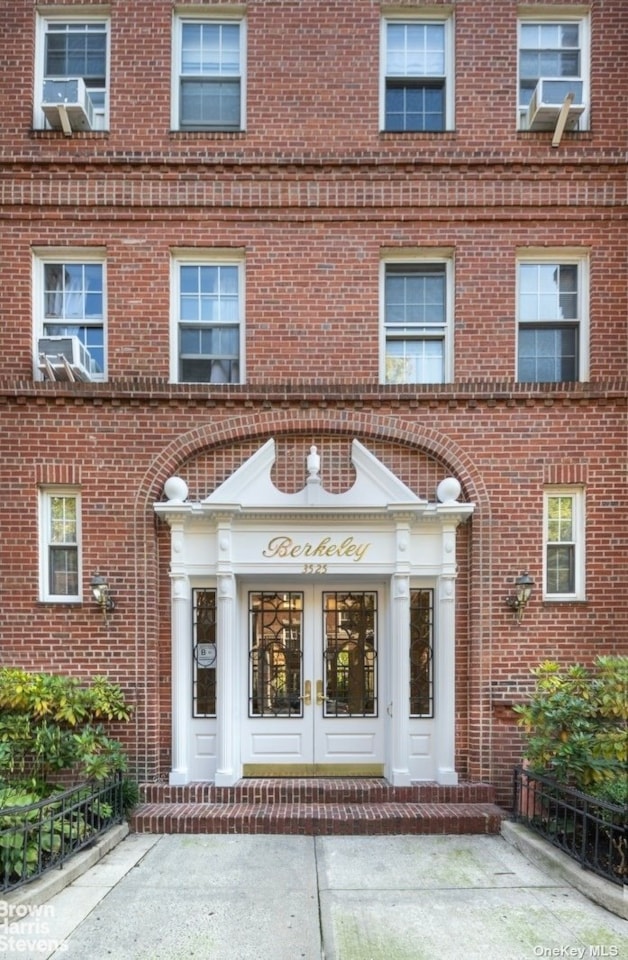
I suppose I’ll have to pass by my old apartment house.  Ugh.  That will be tough. I know my stomach will flip when I get there.  Who will I see?  Is the same super there?  The same doorman?  Will I see any of the neighbors that I adored?  Despised?  And, if I do, will they have time for a stop-’n'-chat, or will they merely nod, smile thinly and walk on, continuing with their lives?

As I must, as well.